Can you imagine being chased by a lion?
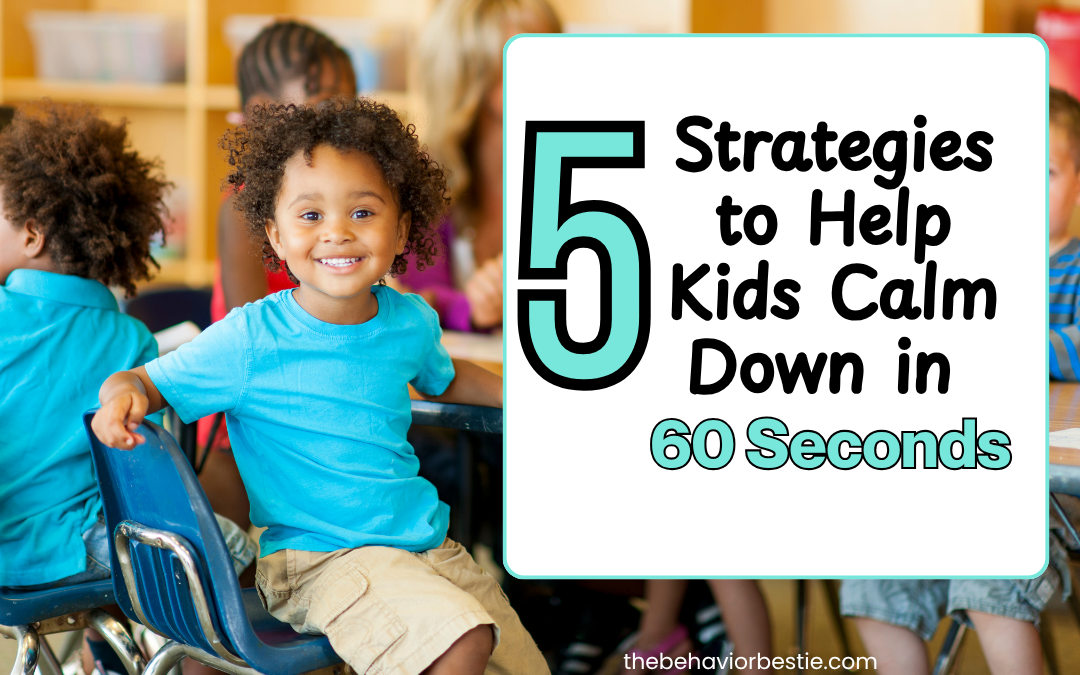
Can you imagine being chased by a lion...you're running for your life...and someone off to the side is yelling 'Just calm down.' Sounds ridiculous, right? But this is what it feels like to some kids who are anxious, scared, or angry. You're telling them to calm down when a lion is chasing them. Except to them, the lion is 'being told to put a device away,' 'being asked to complete an assignment,' or 'being told "No."' This is why just saying 'calm down' doesn't work. But I want to share 5 strategies with you that can help students actually calm down in 60 seconds or less. Ready? Let's dive in.
All five of these strategies work by targeting the brain's alarm system, the amygdala. When a child is anxious, scared, or angry, that alarm system is blaring. That's the body's stress response, what we call fight, flight, or freeze mode. The brain is in a full-on state of emergency. Here's what's important to understand. When the brain is in emergency mode, it can't just calm down. Children are not processing your instructions or demands, and they are not thinking about consequences. Their brain simply will not let them.
These five strategies help bypass that emergency mode by using the body's natural systems, like the vagus nerve, to help kids get to a calmer state. And once they're calm, then they can begin processing.
Strategy 1: The Double Breath (Sniff Sniff Blow for younger kids)
Take two quick sniffs through your nose, then slowly breathe out through your mouth. Repeat this 3 to 4 times.
Why this works: When children are stressed or upset, their breathing becomes fast and shallow, which increases tension in their bodies. This strategy helps reset their body by promoting deeper breathing and helping them return to a calmer state.
Strategy 2: Hum it Out
Find a comfortable space where you can make sounds. Relax your body. With your lips closed, start making a soft 'mmmmm' sound. Notice where you feel the vibrations throughout your body. Hum for 10 to 30 seconds and repeat as needed.
Why this works: Humming creates vocal vibrations that stimulate the vagus nerve, which plays a key role in activating the body's relaxation response. When a child hums, the vagus nerve helps stop the fight-or-flight stress response and signals their body to rest and relax.
Strategy 3: Shake it Out
Stand up and shake your hands, arms, and body for 10 to 30 seconds. You can shake one body part at a time or shake your full body. Repeat as needed.
Why this works: When children are worried, scared, or upset, their bodies build up tension. Shaking helps release the built-up stress energy and tells their body to "calm down...there is no lion."
Strategy 4: Safety Scan (Safe Spy Check for younger kids)
Pause. Slowly look around the room and name different objects that you see, either out loud or in your head. Do this for about 30 seconds.
Why this works: Our nervous system is constantly scanning the environment, asking, 'Are we safe?' When the child slows down and starts naming different things they see in their surroundings, it grounds them in the present moment. They can see that the space is safe, the brain's alarm turns off, and their emotions can begin to relax.
Strategy 5: Cold Reset
Find a quiet space. Splash cold water on your face, run cold water over your wrists, hold an ice cube in your hand, or place a cold ice pack or towel on the back of your neck for 20 to 30 seconds.
Why this works: Cold water interrupts a child's fight-or-flight stress response by lowering blood pressure and slowing the heart rate, moving their body away from the stress response and into a calmer state.
Want to give your child or student even more tools to choose from? Grab this free Coping Skills and Activities print. It's a simple visual chart with 20 strategies kids can use when big emotions show up. Print it, post it, and let them pick what works for them.
Now it's your turn. Pick one strategy and try it today. You don't have to introduce all five at once. Start with the one that feels most natural to you and see how it goes. And if this was helpful, save this post so you can come back to it and share it with another teacher or parent who needs it. Because every child deserves someone in their corner who knows what to do when the lion shows up.